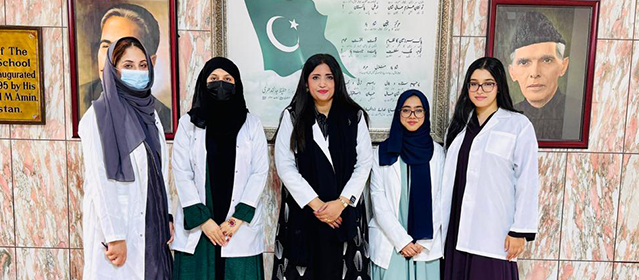
Four students from Pakistan International School English Section Riyadh in Saudi Arabia won the Best in Region Award for their research into bioplastics.
Fatima Haroon, Amna Rehman, Abiha Fatima and Safia Hamid created a bioplastic from sorghum starch, glycerine and gelatine, adding either beetroot, turmeric, vinegar, or citric acid. The team then tested the suitability of these four bioplastic variants for uses such as food packaging and agricultural films. Tests included strength and flexibility, but crucially also water dissolution and decomposition in sunlight and soil.
The team found that citric acid significantly enhanced mechanical strength, flexibility, and water resistance, making it the most promising additive. Beetroot extract provided vibrant coloration and moderate water absorption, while turmeric improved durability under UV exposure. Vinegar enhanced flexibility and moisture resistance. The results affirmed that sorghum-based bioplastics are viable, eco-friendly alternatives to conventional plastics, particularly for packaging, agriculture, and single-use disposables.
Reflecting on the project, team member Amna Rehman said: 'This project was a chance to explore how science can be applied to real-world problems in a meaningful way. I really enjoyed working on this project, and looking back, it’s definitely one of the most meaningful things I did in school.'
The judges said: 'Two things that particularly made this investigation stand out were that the report included a discussion about the economic viability of the solutions that were investigated and that the team carried out a survey to include the views of local people.'