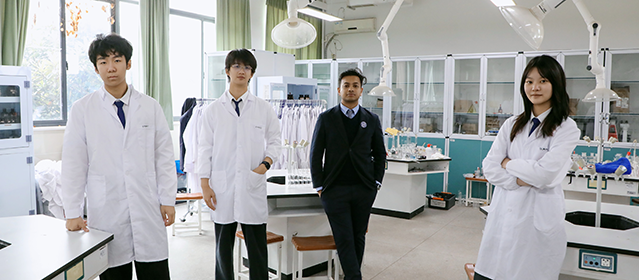
Three students from Nanjing Hankai Academy in China won the Best in Region award for their investigation into whether hydroponics or aeroponics work better for growing crops in places where soil isn’t fertile.
Team members, Yang Sunni, Zhu Chengxuan, Ding Yihe designed and built their own aeroponic system, which included a water misting system and Arduino Nano board. The latter monitored and controlled temperature, water and light levels. They also built a hydroponic system and grew spinach, celery, greens, and chives under controlled conditions using both systems. The team measured performance using growth rate, final yield, water and energy use, maintenance time, and survival rate.
Results showed that the aeroponic system consistently produced the fastest growth, highest yields, greatest survival rates, and lowest water consumption, although it required slightly more electrical energy than hydroponics. Overall, the findings demonstrate that aeroponic vertical farming is a highly efficient and sustainable alternative for food production in areas facing poor soil quality and water scarcity.
Reflecting on the competition, the team wrote: 'We’re all pleasantly surprised and delighted feeling that our hard work had truly paid off. After completing our build, we donated two of our prototypes and introduced the system to a family and a local school in Cambodia, focusing on Sustainable Development Goal: Zero Hunger of global food, water, and agriculture topic.'
The judges were impressed with the team’s prototypes, praising the design and build of the systems and considerations to health and safety.