10 Jul 2025
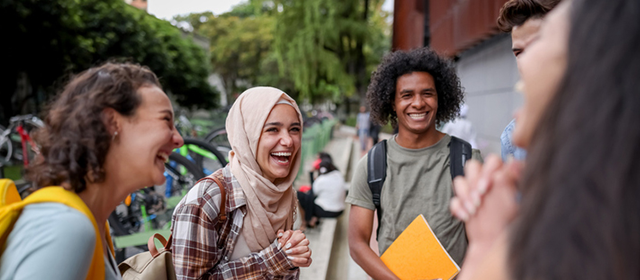
From speaking out on global platforms to designing sustainable solutions in their communities, Cambridge students are proving that climate change education leads to meaningful action.
During London Climate Action Week, we hosted Student Voices: Global Stories of Climate Action and Hope, an inspiring online session that brought together three Cambridge students from the UK, Turkey, and India to share how climate change education has shaped their personal journeys and sparked action.
The session was hosted by Richard Gilby, one of Cambridge’s International Climate Change Education Ambassadors, and highlighted how young people around the world are using what they learn in school to drive real change.
‘We are the most connected generation in history,’ said Ananya Nair, a student from India. ‘If we choose to be, we can be more collaborative and unstoppable.’
UK student, Chiara Stuttard, shared how climate topics can be brought into subjects beyond science and geography, such as art, echoing Cambridge’s multidisciplinary approach to climate change education. And Aktan Soydan, a Cambridge student from Turkey, reminded attendees that climate change affects all countries, regardless of wealth or geography, but those with fewer resources often bear the most burden.
The event showed the power of student voices and how climate change education can turn awareness into action.
Science for a sustainable future
This theme is central to the Cambridge Upper Secondary Science Competition, where learners put scientific thinking into action to solve real-world problems. Working in small teams, students conduct scientific investigations with a focus on sustainability and practical relevance to their school or community.
The judges have now selected their winners for period one of the 2025 competition, and the projects are as innovative as they are impactful.
Sustainability Award and Best in South Asia:
A team of six students from City Montessori School, Gomti Nagar Extension, Lucknow in India, were recognised for their investigation into generating sustainable energy from soil.
‘What made this experience most rewarding was the way science connected us to the world around us,’ said the team. ‘We learned to work collaboratively, question critically, and think creatively, constantly improving our model through trials, failures, and new ideas. We were inspired by the possibility that a simple innovation could serve as both a clean energy source and a solution for environmental restoration.’
The judges praised the project’s scientific rigour, noting the testing of six soil types. ‘The investigation was strong in every aspect… exploring an exciting future technology.’
Best in Country and Engineering Award from Pakistan:
Six students from Bloomfield Hall School, Peshawar in Pakistan won for their research into using compressed air to store renewable energy, another example of how students are creatively addressing sustainability challenges through science.
A global effort
Regional winners were also selected across Europe, East Asia, Sub-Saharan Africa, MENA, and Southeast Asia & Pacific, showcasing the global nature of the competition and the shared commitment of Cambridge learners to tackling urgent environmental issues.
As both the London Climate Action Week event and Cambridge Upper Secondary Science competition show, Cambridge students aren’t just learning about climate change – they are responding to it with purpose, innovation, and collaboration.
Watch our session from London Climate Action Week
Find out more about our Cambridge Upper Secondary Science Competition winners
Hear from Ananya Nair, a Cambridge student in India
Hear from Aktan Sodyan, a Cambridge student in Turkey
Hear from Chiara Stuttard, a Cambridge student in UK